Tarita Foundation · Archive
Primary sources for the study of Asian American history
The Tarita Archive collects, catalogues and publishes primary sources on the Asian American past, so that students, teachers and researchers can work from the evidence itself rather than from summaries of it.
It is a scholarly project run by a student-led nonprofit. Every item is treated as an archival object: it receives a permanent identifier, a description written in the archive’s own voice, a verbatim transcription of whatever text it carries, a statement of what is not known, and a ready citation. Catalogue data is published openly in JSON and CSV. Nothing is paraphrased, tidied or invented to fill a gap.
Two collections are open so far. The first gathers the printed pictures through which a national audience was shown Chinese America between 1866 and 1944. The second gathers first-hand accounts in which Asian American families describe their own lives today, recorded with consent and published under the name each contributor chose. Further collections will be added as material is catalogued.
- Collections open
- Two
- Catalogued items
- 37 objects (43 photographs) and 20 oral-history records
- Period covered
- 1866–1944 (pictures); 2026– (oral histories)
- Identifiers
- TFA-CA-101–137 · TOH-001–021
- Publisher
- Tarita Foundation, a student-led nonprofit, Massachusetts
- Editor
- Jeffrey Liu, founder
- Data
- JSON and CSV for each collection; full picture catalogue as one ZIP
- Rights
- Catalogue text Creative Commons; objects and recordings credited to their holders and contributors
The collections
Each collection has its own catalogue, search, method statement and downloads. Identifiers are permanent and never reassigned; a withdrawn record keeps its number and says so.
Collection I · Pictures
Picturing Chinese America
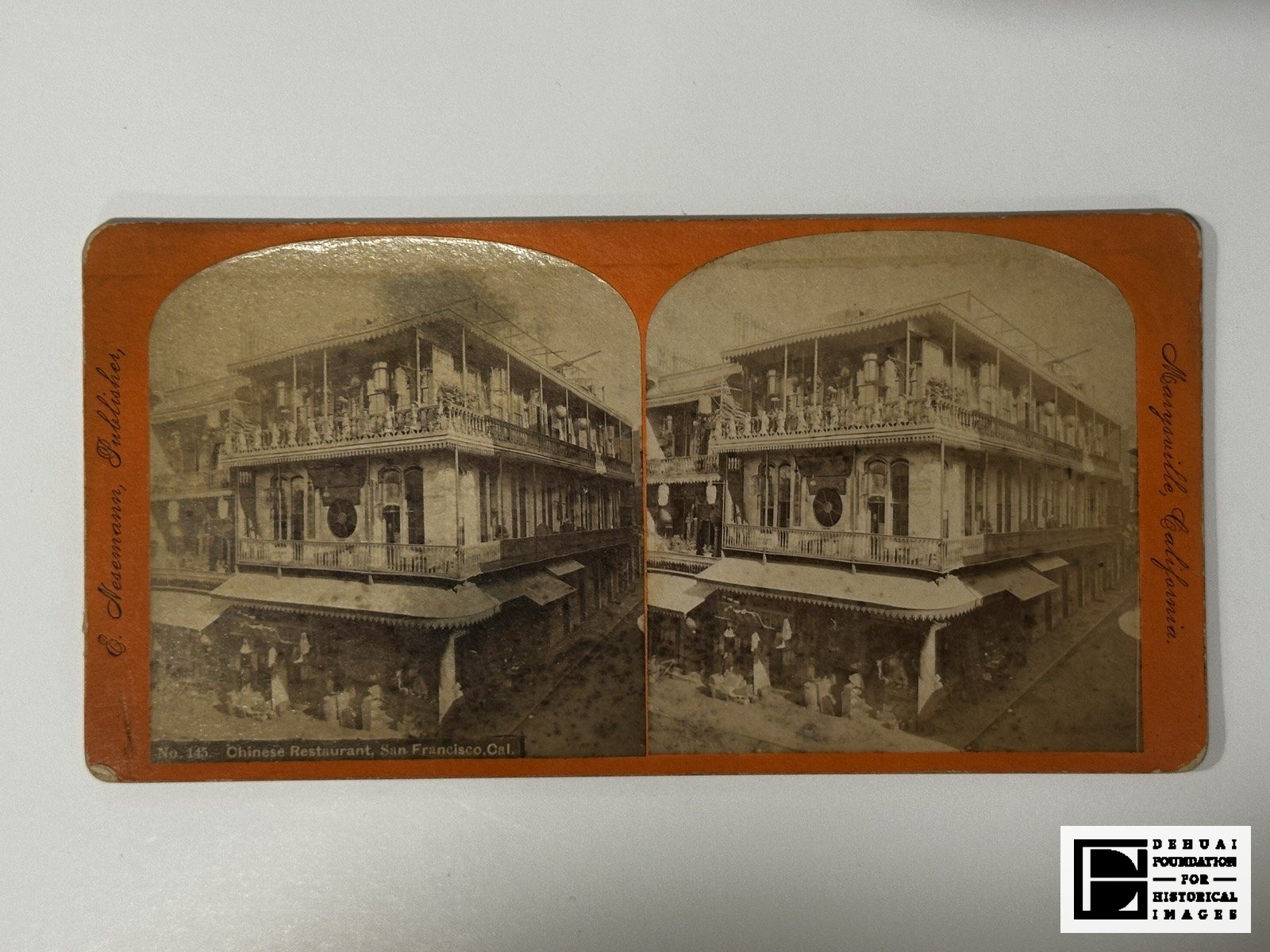
Photographs and printed pictures of Chinese people in America made for sale to a national audience: stereographs by Watkins, Hart and Houseworth, wire-service press photographs, United China Relief posters, a wartime comic book, magazine covers and blood chits. Each object is recorded twice, as a picture and as the caption its publisher printed on it, and the two are kept apart.
- Identifiers
- TFA-CA-101–137
- Records
- 37 objects, 43 photographs
- Period
- 1866–1944
- Holder
- Dehuai Foundation for Historical Images
“There is no record of how John Smith’s family did in 1875, on a given Monday. That just doesn’t exist.”TOH-013 · recorded interview, 23 September 2026
Collection II · Voices
Asian American Oral History Archive
First-hand accounts of Asian American family life collected by Tarita Foundation students: recorded interviews published as audio with verbatim transcripts, and written family questionnaires published as given. Contributors consent explicitly, choose how their name appears, and may correct or withdraw a record at any time. Photographs are held until a second written consent.
- Identifiers
- TOH-001–021
- Records
- 2 interviews, 18 questionnaires
- Period
- 2026–, ongoing
- Formats
- Audio, transcript, questionnaire
Method
The same standards apply across collections, so that a record from either can be cited beside one another and beside material from any other archive.
01
Description is kept separate from the source
Captions, answers and speech are transcribed exactly, including what is offensive, misspelled or uncertain. The catalogue’s own description sits beside them and never adopts their point of view. Unreadable text is marked, not guessed.
02
What is not known is recorded
Every record carries a section for open questions: an unverified date, a disputed attribution, a name spelled by ear. A record that admits a gap is more useful to a researcher than one that quietly fills it.
03
Consent, rights and citation are explicit
Objects are credited to their holder and carry its mark. Oral-history contributors give recorded or written consent and set how they are named. Each record states its licence and offers a citation with a permanent identifier and a stable address.
The archive is a project of the Tarita Foundation, a student-led nonprofit working to bring Asian American history into American classrooms. It is edited by Jeffrey Liu, its founder, with student volunteers who catalogue objects and conduct interviews. Institutions holding relevant material, researchers wishing to use or cite records, and families wishing to contribute a story are invited to write.
taritafoundation@gmail.comContribute an objectContribute a family story